Vietnam E-Visa for Qatari Citizens 2026: The Only Guide You Actually Need
If you’re looking into the Vietnam visa for Qatari citizens in 2026, you’ve probably already noticed that the information online ranges from outdated to outright wrong — and getting this wrong at the airport is not a situation you want to be in. Qatar is one of the world’s great travel hubs. Hamad International Airport (DOH) in Doha connects to virtually everywhere, and Vietnam — Hanoi, Ho Chi Minh City, Da Nang — sits on routes that Qatar Airways serves with solid frequency. The distance between Doha and Southeast Asia is short in aviation terms. The paperwork, done correctly, should be equally painless.
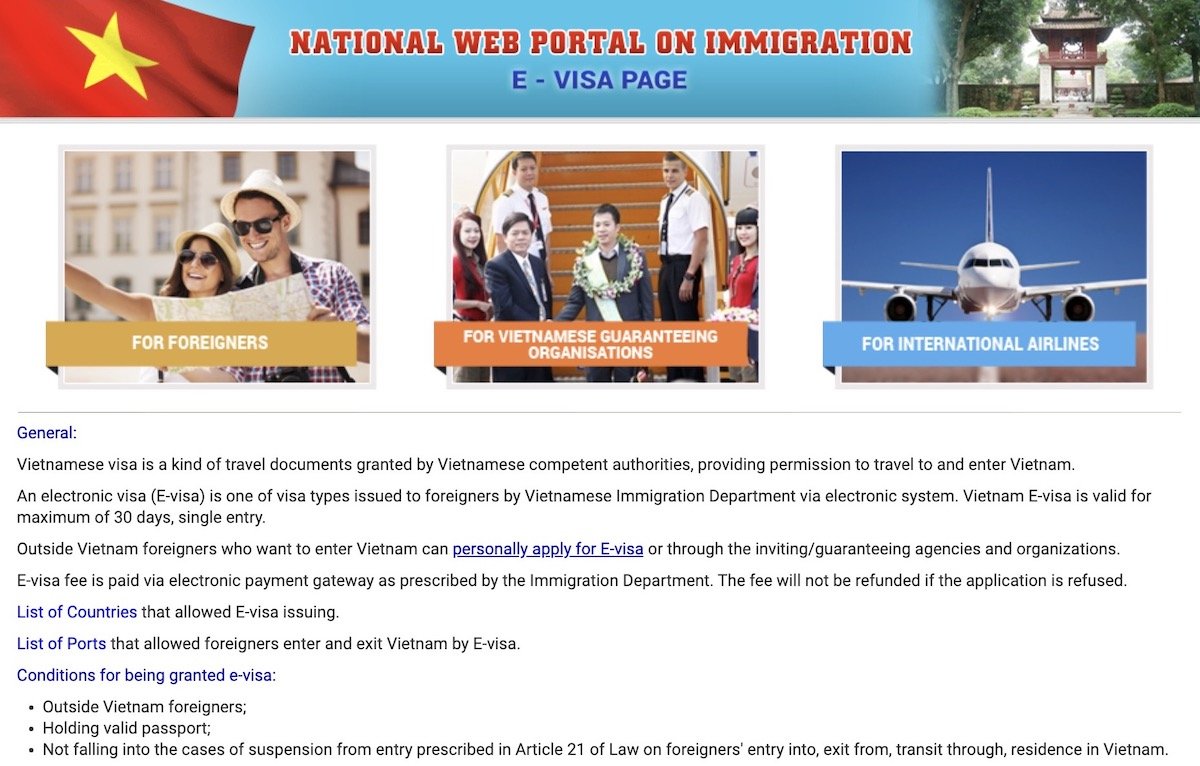
So let me clear the air immediately. The Visa on Arrival approval letter system is completely dead. Obsolete. There is no travel agent in Qatar, no “visa facilitation” website, no third-party service that can hand you a VOA approval letter and guarantee you’ll board your Qatar Airways flight without a problem at the check-in counter. That mechanism no longer exists as a valid entry pathway for Vietnam in 2026. Anyone still selling it is either years behind the times or running a scheme. The only legitimate option for Qatari nationals heading to Vietnam is the Vietnam 90-day E-visa — a government-issued digital travel authorization, applied for entirely online, delivered to your inbox, and accepted at every Vietnamese international airport.
The Vietnam visa for Qatari citizens is genuinely accessible. The 90-day window is one of the most generous in the region. The application is online. The approval arrives by email. What trips people up — consistently, predictably, every single week — is a set of Arabic name formatting issues that the e-visa portal handles poorly. I’ll cover those in detail. But first, the requirements.
Vietnam E-Visa for Qatari Citizens 2026: The Only Guide You Actually Need
Vietnam E-Visa Requirements for Qatari Citizens
The Vietnam 90-day e-visa is available to Qatari passport holders for both tourism and business travel. Single entry and multiple entry are both available under the same application — you choose at the time of submission. If your travel plans include any possibility of crossing into Oman, UAE, Saudi Arabia, or other Gulf states and returning to Vietnam within the same itinerary, choose multiple entry from the start. You cannot switch after approval.
Your Qatari passport must carry at least six months of validity beyond your planned last day in Vietnam. Departing Hanoi on December 10? Your passport must be valid until June 10 the following year, minimum. Airlines enforce this rule at check-in in Doha. Immigration enforces it on arrival in Vietnam. The clock starts from your exit date, not your entry date — a distinction that catches travelers who are close to renewal.
Document checklist:
- Valid Qatari passport (minimum 6 months remaining beyond your last day in Vietnam)
- Digital passport photo: plain white background, front-facing, recent JPG, no glasses, head covering only for religious reasons
- Clear scan of the biographical data page of your passport (full page, sharp, no shadows or cropping)
- Intended entry and exit dates for Vietnam
- First accommodation address in Vietnam (hotel name and address is sufficient)
- Valid email address for receiving your approval
- Credit or debit card for payment
Standard processing runs 3 business days. When your schedule compresses — a last-minute booking from Doha, a business trip that materialised this week, a family situation that reshuffled everything — urgent processing through priority channels can deliver an approved e-visa in 2 to 4 hours. The urgent tier costs more. It costs less than a missed Qatar Airways flight.
Denied Boarding at DOH: What Happens When Your Visa Isn’t Ready
Hamad International Airport in Doha is consistently ranked among the finest airports in the world — beautiful architecture, excellent lounges, efficient connections. And somewhere in that gleaming terminal, at a Qatar Airways check-in desk, a Qatari traveler heading to Vietnam hits a problem that no amount of airport elegance can fix: the e-visa is flagged.
The scenario is one I’ve seen play out countless times across decades in this industry. Bags on the belt. Travel documents out. The agent runs the details. Pause. Types again. The visa has a name mismatch. Or the approval is still processing and the window has closed. Or — and this is where Arabic-speaking travelers get hit hardest — a romanization inconsistency in the name means the visa was issued under a version of the applicant’s name that doesn’t precisely match the passport. Flight departs in three hours.
The government portal has no emergency lane. It has a standard processing queue, and that queue does not care that your gate opens in 90 minutes. What does exist is our Super Urgent Visa Service — dedicated priority processing that bypasses the standard pipeline entirely and can produce a clean, approved e-visa in 2 to 4 hours. It’s not the cheapest option. It’s the only option when you’re standing at a DOH check-in counter with a boarding deadline.
💡 Expert Insight from Stanley Ho: “Over my 20+ years handling travel logistics, the most frequent disruption occurs at the check-in desk due to simple application formatting errors. If you are stuck at the airport and denied boarding, don’t panic—our emergency team can secure a new E-visa clearance through priority channels within hours, saving your flight.”
Contact us the moment you realise there’s an issue — at the counter, in the taxi to the airport, the evening before departure. WhatsApp (+84 968 18 77 18) or email (sales@visaonlinevietnam.com). The team operates 24 hours a day because Qatar Airways departures run at all hours.
Vietnam E-Visa for Qatari Citizens 2026
The Qatari Passport Trap: Arabic Name Romanization Errors That Kill Applications
This section is the most Qatar-specific part of this entire guide, and it’s where the Vietnam visa for Qatari citizens most frequently breaks down. Arabic names, when romanized for Western passport systems, carry a set of structural complexities that the Vietnam e-visa portal was not built to handle gracefully.
The patronymic chain problem.
Qatari names often follow a multi-generational patronymic structure: personal name + bin/bint (son/daughter of) + father’s name + grandfather’s name, sometimes extending further. In the passport’s biographical data page, this full chain may be rendered across the “given name” and “surname” fields in ways that vary depending on when and where the passport was issued. The machine-readable zone at the bottom of the data page, however, contains the standardized version — truncated where necessary, formatted according to ICAO norms.
The rule is absolute: enter your name exactly as it appears in the machine-readable zone, not as it appears in the main biographical text. If the machine-readable zone shows “AL THANI MOHAMMED HAMAD” in one field and leaves another blank, that is the format you use. Do not add “bin.” Do not add the full patronymic chain that appears in the biographical text above. The machine-readable zone is the legal standard.
The “Al-” tribal prefix problem.
Many Qatari family names carry the “Al” or “Al-” tribal prefix — Al Thani, Al Kuwari, Al Marri, Al Sulaiti. In the machine-readable zone, this prefix typically appears without the hyphen and attached to the surname: “ALTHANI,” “ALKUWARI.” In the biographical text of the passport, it may appear with a hyphen or a space. Whatever the machine-readable zone shows — hyphenated, unhyphenated, or spaced — that is the version that must appear in the e-visa application.
The honorific and title problem.
Titles such as “Sheikh,” “Sheikha,” “Sayed,” and professional prefixes like “Dr.” or “Eng.” appear on many Qatari identity documents and business cards. They do not appear in the machine-readable zone of the passport. They must not be entered into the e-visa application. The visa is issued against the passport, not the business card. Including an honorific that doesn’t appear in the machine-readable zone creates an immediate name mismatch.
The single rule covering all three situations: open your passport to the data page, read the two lines of machine-readable text at the bottom, and enter that name — letter by letter — into the application. Nothing more. That is the name Vietnam immigration will check against your passport at arrival.
Skip the Queue: VIP Fast-Track at Vietnam’s Airports
Qatari travelers are, as a rule, accustomed to a certain standard of travel. Qatar Airways is one of the world’s top-rated carriers. Hamad International Airport sets the benchmark for airport experience. Arriving at Tan Son Nhat International (SGN) after a long-haul flight from Doha and joining a 45-minute immigration queue is, to put it plainly, an unnecessary contrast.
The VIP Airport Fast-Track service bridges that gap. A personal concierge meets you at the gate — before you’ve joined the disembarkation crowd — and escorts you directly through the priority diplomatic immigration lane. No queue. No shuffling forward with luggage. You are processed and moving toward the baggage carousel while the rest of the flight is still threading through the arrivals corridor.
Available at Noi Bai International (HAN) in Hanoi, Tan Son Nhat International (SGN) in Ho Chi Minh City, and Da Nang International (DAD). For business travelers with a schedule to keep, or for anyone who simply expects their arrival in Vietnam to match the quality of the flight that got them there, this service makes obvious sense. Add it at the time of your e-visa application.
How to Apply for Your Vietnam E-Visa in 2026
Once you’ve confirmed your name formatting — particularly the machine-readable zone guidance above — the application itself is straightforward. Here is the complete process:
- Go to visaonlinevietnam.com — an officially authorized processing service. Avoid clicking paid search results for unfamiliar websites offering “cheap Vietnam visas,” which often have opaque processing pipelines and slow customer support.
- Choose your visa type — 90-day single entry or 90-day multiple entry. When in any doubt at all, choose multiple entry. The price difference is modest; the flexibility is real.
- Enter your personal details — using your name exactly as it appears in the machine-readable zone of your Qatari passport’s biographical data page. Re-read the Arabic romanization section above before you type anything. Name errors are the leading cause of e-visa rejections for Qatari applicants.
- Upload your documents — a full, sharp scan of your passport biographical page and a recent photo on a plain white background. Blurry scans and tinted backgrounds are the second most common rejection trigger.
- Select processing speed and pay — standard (3 business days) or urgent (2–4 hours). If your flight is within the next 7 days, urgent processing is a reasonable peace-of-mind investment.
- Save your approval email — download it, print a copy, and keep both on your phone. Vietnam immigration accepts digital and paper presentations. Having both takes 30 seconds and removes all risk.
Apply at least 10 days before departure on standard processing. This gives you a buffer to correct any issues without needing to pay emergency fees.
Frequently Asked Questions
Can Qatari citizens still get a Vietnam Visa on Arrival in 2026? No. The VOA approval letter system is completely obsolete. There is no legitimate service in Qatar or anywhere else that can provide a valid Visa on Arrival letter for Vietnam in 2026. The Vietnam visa for Qatari citizens in 2026 means one thing: the 90-day E-visa, applied for online, received by email. That’s the entire process. Anything else is misinformation.
How long can Qatari citizens stay in Vietnam on the 90-day E-visa? Up to 90 days per entry. You choose single or multiple entry at the time of application. Multiple entry is the better choice for anyone whose itinerary includes side trips to Cambodia, Laos, or Thailand with a return to Vietnam. Single entry is fine if your Vietnam stay is a single uninterrupted block.
My Qatari passport name has “Al-” and a long patronymic chain — how do I enter it correctly? Use only what appears in the machine-readable zone at the bottom of your passport’s biographical data page — the two lines of capital letters. That zone contains the standardized, ICAO-formatted version of your name. No honorifics, no hyphens that don’t appear in the zone, no extensions beyond what the zone shows. If the zone reads “ALTHANI MOHAMMED HAMAD,” that is your entry — not “Sheikh Mohammed bin Hamad Al-Thani.” The machine-readable zone is the only reference that matters.
Can I extend my Vietnam E-visa while I’m in the country? In-country extensions are technically possible but involve in-person visits to a Vietnamese immigration office with no guaranteed outcome. If you think you may want to stay longer than 90 days, the far simpler path is to exit to a neighboring country and reapply for a fresh e-visa before returning. Speak to the team at visaonlinevietnam.com before your trip if a long stay is part of your plans.
Is the Vietnam E-visa valid when flying from Doha’s Hamad International Airport? Yes, completely. The Vietnam E-visa is valid regardless of where you depart from — DOH (Doha), or any other international airport. Entry restrictions based on departure origin do not apply to the e-visa. The only caveat that occasionally catches travelers is at certain remote Vietnamese land border crossings, which may not be equipped to process e-visas. Arriving by air at any Vietnamese international airport carries no such concern.
About the Reviewer: Stanley Ho is the CEO of VisaOnlineVietnam and a recognized expert consultant in the international aviation and travel service industry. With decades of experience navigating complex immigration regulations, Stanley and his team specialize in providing seamless visa solutions, fast-track airport services, and emergency travel assistance for global citizens visiting Vietnam.