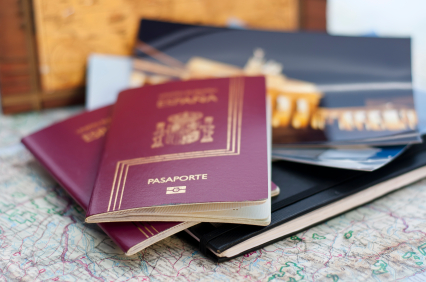
The Quickest Route: Fast Visa to Vietnam for Hassle-free Entry
If you need a fast visa to Vietnam in 2026, the good news is that the system was rebuilt specifically to make speed possible. The bad news — and I say this bluntly because too many travelers find out the hard way — is that the old “fast” options you might read about elsewhere are gone. The Visa on Arrival approval letter system no longer exists. Completely discontinued. Any service still advertising a VOA approval letter for air travelers is selling you a product that will not work at the airport, and the consequences of discovering that at check-in are exactly as bad as you imagine.
What replaced it is the 90-day Vietnam e-visa: a fully digital approval document, issued by the Vietnamese Immigration Department, processed entirely online. And because it is digital, the speed tier you choose is genuinely flexible — from 3 business days for standard applications right down to 2 hours for genuine airport emergencies. New Zealand travelers flying out of Auckland (AKL), Wellington (WLG), or Christchurch (CHC) have been using this system with excellent results. This guide explains every speed tier, who needs each one, and how to apply without wasting a single hour.
Fast Visa to Vietnam 2026: The Quickest Route to Hassle-Free Entry
Why Speed Matters More Than Ever for Vietnam Visas in 2026
Vietnam’s immigration system upgraded significantly in 2025 and 2026. The country deployed AI-powered Smart-Gate technology at its major international airports — Tan Son Nhat (SGN), Noi Bai (HAN), Da Nang (DAD) — which performs automatic real-time cross-checks between your e-visa record and the machine-readable zone of your passport the moment you present it at the gate. Fast is good. Fast and accurate is the only thing that actually works.
This matters for speed-focused applicants because the temptation when you are in a hurry is to rush through the form. A single transposed digit in your passport number, one mismatched character in your name — and the Smart-Gate flags your entry. The airline flags you before you even board. Getting a fast visa to Vietnam is not just about choosing the right processing tier; it is about getting the details right the first time, at speed. I’ll come back to this throughout the guide because it is where rushed applications consistently go wrong.

The Quickest Route: Fast Visa to Vietnam for Hassle-free Entry
The Three Speed Tiers: Which One Do You Actually Need?
Standard Processing — 3 Business Days
This is the baseline. You submit your application, it enters the standard processing queue, and you receive your e-visa approval by email within 3 business days. For most travelers — those booking Vietnam trips at least a week in advance — this is entirely sufficient and the most cost-effective route. Standard processing is available 24/7; submissions made on weekends enter the queue and are processed on the next available business day.
New Zealand travelers should calculate carefully here. If you are departing Auckland on a Friday and submit your application the previous Tuesday, standard processing should deliver your approval with a day to spare. If your departure is Wednesday and you are submitting Monday, that margin is thin. In those cases, move up a tier.
Urgent Processing — 2 to 8 Hours
The urgent tier is for travelers whose departure window is too tight for standard processing: flights within 24–48 hours, last-minute bookings confirmed the day before travel, or situations where standard processing just did not arrive in time. Applications submitted through the urgent channel are handled by a dedicated team operating around the clock, seven days a week — including weekends and Vietnamese public holidays, which the standard government queue does not process.
Two to eight hours is the delivery window, depending on current application volume and the quality of your submitted documents. Clean documents — sharp passport scan, correct photo, name entered precisely from the MRZ — move through fastest. Blurry scans and formatting errors require back-and-forth clarification that adds time you do not have.
Emergency Processing — 2 to 4 Hours (Airport Crisis Service)
The emergency tier exists for one specific scenario: you are at the airport, your flight is in a few hours, and something has gone wrong with your visa. Either you forgot to apply, you discovered an error in your existing approval, or the airline’s check-in system flagged a data mismatch. This is the service that pulls travelers back from the edge of missing international flights.
At Auckland International Airport, this scenario plays out more often than the airline ground staff would probably like to admit. A traveler arrives at the Air New Zealand or Cathay Pacific check-in desk with what they believe is a valid visa approval, only to have it flagged — usually a name formatting error or a passport number discrepancy. With 3 hours to departure and a non-refundable itinerary on the line, the 2–4 hour emergency service is the only realistic path to making the flight.
The Three Speed Tiers: Which One Do You Actually Need?
How Fast Can You Actually Get a Visa to Vietnam?
Here is the honest breakdown, without the marketing fluff:
2–4 hours: Emergency processing for airport crisis situations. Requires direct case management, around-the-clock team, priority channel submission. Available any day, any time.
4–8 hours: Urgent processing for same-day departures or next-morning flights. Best submitted before 10 PM local time to allow the processing window to clear before check-in.
24 hours: Same-day standard urgent service for departures the following day. Lower cost than the emergency tier; appropriate when you have at least 24 hours before check-in.
3 business days: Standard processing. The right choice for anything beyond a 72-hour departure window. Cost-effective, reliable, and by far the most common route for New Zealand travelers booking Vietnam trips in advance.
The key variable in all of these timelines is document quality. An application submitted with a perfectly clear passport scan, a correctly formatted name, and a clean passport photo moves through every tier faster than the stated maximum. An application with a blurry scan or a name entered in the wrong sequence requires manual review and correction — which can double the processing time at the worst possible moment.
The Auckland Airport Crisis: What a Fast Visa Rescue Actually Looks Like
Let me walk you through a scenario that happens regularly at AKL. A traveler — let us say a New Zealand professional flying to Ho Chi Minh City for a week-long conference — submitted their e-visa application four days ago. They received an approval email. Everything looked fine. They arrive at the international terminal, queue for check-in, and hand over their New Zealand passport.
The check-in agent cannot verify the visa. The name on the approval reads “SARAH JANE ROBERTSON” but the passport’s machine-readable zone encodes it as “ROBERTSON SARAH JANE.” The portal accepted the given-name-first format. Vietnam’s border AI system, which the airline’s check-in software pre-checks against, does not. The visa is technically valid but the data mismatch makes it unacceptable for boarding.
The flight departs in two hours and forty minutes.
This is not a catastrophe — but it requires immediate action. The traveler contacts the emergency processing service, submits a fresh application with the name copied exactly from the MRZ, and the priority team processes it through the fast channel. New approval delivered digitally in under three hours. Flight made.
💡 Expert Insight from Stanley Ho: “Over my 23+ years handling travel logistics and Vietnam visa services, the most frequent disruption occurs at the check-in desk due to simple application formatting errors. If you are stuck at the airport and denied boarding, don’t panic—our emergency team can secure a new E-visa clearance through priority channels within hours, saving your flight.”
The margin between “made the flight” and “missed the flight” in this scenario is entirely determined by how quickly the traveler stops trying to fix the problem through the airline and starts a fresh application through the emergency service. Every minute spent on hold with the airline is a minute not spent solving the actual problem.
The Single Biggest Mistake in Fast Visa Applications: Name Formatting
When speed is a factor, the instinct is to fill in the application quickly. That instinct is responsible for the majority of fast visa problems I see. The name field is where it all falls apart.
The Vietnam e-visa portal matches your name against the machine-readable zone in your passport — specifically the two lines of encoded text at the bottom of your photo page, separated by chevron (<<<) characters. This is not the same as how your name appears in your email, on your airline booking, or on your driver’s licence. It is a specific character sequence in a specific field order, and it is the only format the Vietnamese border system recognises as valid.
For New Zealand passport holders, the most common traps are:
Māori names with macrons. Characters like ā, ē, ī, ō, ū (as in Māui, Hēmi, Tūhoe, Wirihana) do not exist in the passport MRZ character set. The MRZ strips them to plain vowels — ā becomes a, ō becomes o. Your visa application must use the macron-free version, because that is what the border system checks against. This is not an error in the system; it is how international passport standards encode non-ASCII characters.
Pacific Island and compound names. Many New Zealand passport holders with Samoan, Tongan, Fijian, or other Pacific heritage have names that appear differently in everyday use versus the MRZ. The MRZ is always right. Copy it exactly.
Field length truncation. Very long names are sometimes truncated in the MRZ due to character limits. If your name is cut off in the MRZ, your application must reflect the truncated version — entering the full untruncated name will cause a mismatch.
The rule is absolute and applies equally whether you are doing standard processing or submitting an emergency application at 5 AM at Auckland Airport. Copy the MRZ. Do not interpret it, reformat it, or correct what looks like an error.
What You Need to Apply for a Fast Visa to Vietnam
The document requirements are the same regardless of which speed tier you choose:
- A valid passport with at least 6 months of remaining validity beyond your planned departure date from Vietnam — not your entry date, your departure date
- A recent passport-style photograph: plain white background, full face forward, no glasses, well lit
- A clear scan of your passport bio-data page: the full page, sharp focus, no glare, no cut-off edges
- Your intended entry and exit dates
- An address in Vietnam: your first hotel, a business address, or a host’s address
- A credit or debit card for payment
That is the complete list. No embassy appointment. No invitation letter for standard tourist or business visit applications. No physical documents couriered anywhere. The entire process — submission, payment, approval delivery — happens digitally.
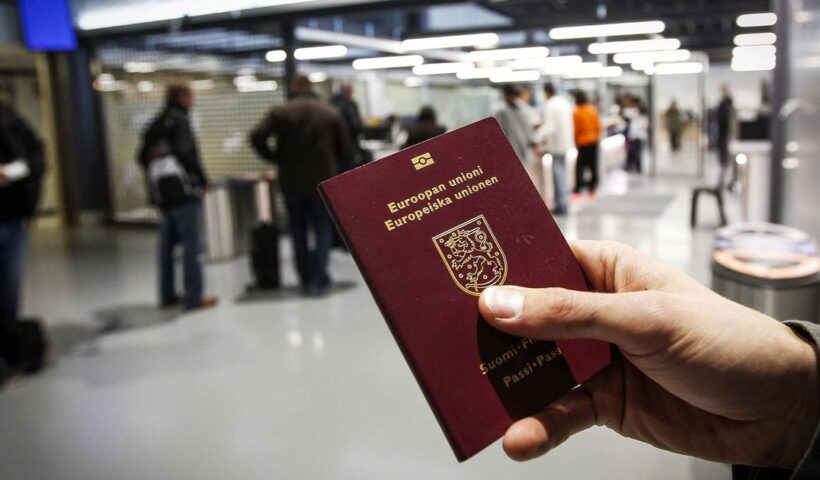
How to Apply for a Fast Visa to Vietnam: Step by Step
Step 1. Go to visaonlinevietnam.com/apply-vietnam-visa and select your visa type and processing tier. Be honest about your timeline. If your flight is in 6 hours, select the emergency tier — not the urgent tier.
Step 2. Enter your personal details. Stop at the name field. Open your passport to the photo page. Look at the two lines at the bottom — the machine-readable zone. Copy your name exactly as it appears there, character by character, including any truncation.
Step 3. Enter your passport number exactly as it appears in the MRZ — again, from the encoded lines at the bottom of the page, not from the visually formatted number above.
Step 4. Upload your passport photo and passport scan. Take a moment to verify both files are clear and complete before uploading.
Step 5. Enter your Vietnam accommodation address and travel dates.
Step 6. Select your processing speed, pay, and submit. Keep your confirmation reference number. For urgent and emergency tiers, stay by your phone and email — the team may need to verify a document before issuing approval.
Step 7. Receive your e-visa approval by email. Save it in multiple places: phone gallery, email inbox, and a print copy if you have time. Vietnam accepts both digital and physical visa at all entry points.
Step 8. Present your visa approval at check-in. Airlines flying Vietnam routes — including Air New Zealand, Singapore Airlines, Cathay Pacific, Vietnam Airlines, and Emirates — will verify your visa at the check-in desk before issuing a boarding pass.
Skip the Queue at Vietnam’s Airports: VIP Fast-Track Service
You moved fast, got your visa, made your flight. Now you have landed at Tan Son Nhat (SGN) in Ho Chi Minh City after a red-eye from Auckland via Singapore, and the immigration hall is heaving. At peak arrival hours, SGN queues for standard immigration processing can run 40 to 60 minutes. That is a long time to stand when you are jet-lagged and have a meeting at 9 AM.
The VIP Airport Fast-Track service at SGN, and at Noi Bai (HAN) in Hanoi, eliminates this entirely. A personal concierge meets you at the aircraft gate, escorts you through the priority diplomatic lane, and has you through passport control and into the arrivals hall before the main cabin queue has moved more than a few dozen people. For business travelers with tight connection windows, and for anyone who has just flown long-haul from New Zealand, this is a genuine quality-of-life upgrade — not a luxury affectation.
The fast-track service is available at all major Vietnam international airports: SGN (Ho Chi Minh City), HAN (Hanoi), DAD (Da Nang), CXR (Cam Ranh / Nha Trang), and PQC (Phu Quoc). New Zealand travelers routing to beach destinations should specifically book CXR or PQC fast-track — those airports handle disproportionate arrival volumes relative to their size, and queues can genuinely surprise first-timers.
Frequently Asked Questions
What is the fastest possible way to get a visa to Vietnam in 2026?
The emergency processing service delivers e-visa approval within 2 to 4 hours through a priority channel operating 24 hours a day, 7 days a week. This is the fastest available option and is designed specifically for airport crisis situations — travelers at the check-in desk with a departure in a few hours. For non-emergency situations, the urgent processing tier delivers within 2 to 8 hours. Standard processing takes 3 business days.
Is Visa on Arrival still available as a fast entry option for Vietnam?
No. The Visa on Arrival approval letter system was discontinued and is no longer valid for entry into Vietnam. Any service advertising VOA letters in 2026 is selling an obsolete product. The 90-day e-visa — applied for online and received digitally before travel — is the only valid entry mechanism for most nationalities, including New Zealand citizens.
Can I get a fast visa to Vietnam on a weekend or public holiday?
Yes. The urgent and emergency processing tiers operate 24/7, including weekends, Vietnamese public holidays, and New Zealand public holidays. The standard government processing queue does not operate on non-business days, which is another reason the priority service channel is necessary for short-notice travel.
How do I know which processing speed to choose for my situation?
A simple rule: if your departure is more than 72 hours away, standard processing is fine. If you are departing within 24–72 hours, choose urgent processing. If you are already at the airport or departing within the next few hours, contact the emergency service immediately. Err on the side of the faster tier — upgrading is inexpensive compared to the cost of a missed flight.
What happens if my fast visa application contains an error?
If the error is identified before approval is issued, contact the service immediately for correction — this is fastest. If you have already received approval with an error, do not attempt to travel on it. Vietnam’s AI Smart-Gate system will detect the mismatch between your visa record and your passport’s machine-readable zone. Contact the emergency service for a corrected reapplication; this can often be completed and delivered before your flight departs if you act quickly.
About the Reviewer: Stanley Ho is the CEO of VisaOnlineVietnam and a recognized expert consultant in the international aviation and travel service industry. With 23+ years of experience in travel logistics and Vietnam visa services, Stanley and his team specialize in providing seamless visa solutions, fast-track airport services, and emergency travel assistance for global citizens visiting Vietnam.


Comments are closed.