
Vietnam E-Visa for Chinese Citizens 2026: The Only Guide You Actually Need
China and Vietnam share a border, a long history, and an enormous amount of back-and-forth travel — tourists, traders, families visiting relatives, students on exchange. You’d think that proximity would make getting a Vietnam visa the simplest thing in the world. It doesn’t. And if you’ve been burned by confusing government websites, outdated forum advice, or someone confidently telling you that Visa on Arrival “still works,” then you know exactly the frustration I’m talking about.
Here’s where things stand in 2026. The old Visa on Arrival approval letter system is completely dead. Done. Obsolete. There is no legitimate travel agent or online service that can issue you a “VOA letter” that gets you on a flight and into Vietnam. That system was retired, and any service still marketing it is either dangerously behind the times or actively trying to scam you. What exists now — and what has existed for years — is the Vietnam 90-day E-visa, a government-issued digital travel authorization that covers both single and multiple entries. This is the standard. This is the law. Everything else is noise.
For Chinese passport holders, the news is actually quite good. Vietnam has streamlined its e-visa system significantly, and the application process — while not without its quirks — can be completed online in under 30 minutes if you know what you’re doing. The 90-day window is generous. The price is reasonable. The catch? A handful of formatting landmines that trap Chinese travelers at a rate that should be criminal. More on that shortly.
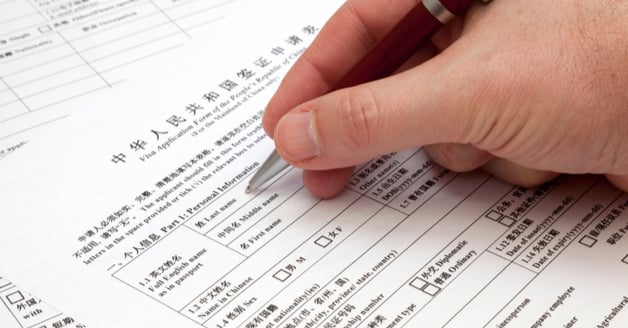
Vietnam E-Visa Requirements for Chinese Citizens
The Vietnam 90-day e-visa is available to Chinese passport holders for both tourism and business purposes. Single-entry and multiple-entry versions both exist under the same application system — you choose during the application.
Your passport must be valid for at least six months beyond your intended departure date from Vietnam. If you’re flying out of Hanoi on September 15, your passport needs to be valid until at least March 15 of the following year. This is a hard requirement. Airlines enforce it at check-in, and immigration enforces it at the border.
Document checklist:
- Valid Chinese passport (minimum 6 months remaining validity)
- Digital passport photo: white background, front-facing, taken within the last 6 months, JPG format
- Scanned copy of the biographical data page of your passport (clear, no glare, full page visible)
- Intended entry and exit dates
- Accommodation address in Vietnam (first hotel is sufficient)
- Valid email address (your approved e-visa arrives here)
- Payment method: major credit/debit cards accepted
Processing time under the standard service runs 3 business days. Urgent processing — and yes, there is a legitimate urgent option when you’re flying in 24-48 hours — can deliver in as little as 2 to 4 hours through priority channels. The standard e-visa fee is modest; urgent and super-urgent tiers cost more but save your trip when time collapses on you.

Denied Boarding at PEK/PVG/CAN: What Happens When Your Visa Isn’t Ready
Let me paint you a scene that plays out at Beijing Capital International Airport (PEK), Shanghai Pudong (PVG), and Guangzhou Baiyun (CAN) more often than anyone wants to admit.
You’re at the check-in counter. Bags on the scale, boarding pass half-printed, your WeChat notifications have gone silent because you’re mentally already in Hanoi. Then the agent stares at her screen. Types something. Stares again. She tells you, politely but definitively: your Vietnam e-visa is showing an error. Or hasn’t been approved yet. Or the name on the visa doesn’t match the name on your passport. Flight boards in three hours.
That moment — and I have seen it hundreds of times across decades in this industry — is pure, stomach-dropping panic. The bags come back off the scale. You step aside. You start calling everyone you know.
Here’s what I tell people who find themselves standing at that counter with a flight looming: do not try to figure it out yourself through the official government portal. That portal has a queue. It has a standard processing pipeline. It does not have a “my flight is in 180 minutes” button.
What does exist is our Super Urgent Visa Service — emergency priority processing through dedicated channels that can secure a new, clean e-visa approval in 2 to 4 hours. It’s not cheap compared to the standard application. But compared to a missed flight, a forfeited hotel booking, and a rescheduled trip? It’s nothing. Our emergency team handles exactly these situations. The service operates around the clock because flights don’t respect business hours.
💡 Expert Insight from Stanley Ho: “Over my 20+ years handling travel logistics, the most frequent disruption occurs at the check-in desk due to simple application formatting errors. If you are stuck at the airport and denied boarding, don’t panic—our emergency team can secure a new E-visa clearance through priority channels within hours, saving your flight.”
Contact via WhatsApp (+84 968 18 77 18) or email (sales@visaonlinevietnam.com) the moment you realize there’s a problem. Don’t wait until you’re at the gate.
The Chinese Passport Trap: Name Formatting Errors That Kill Applications
This section might be the most important thing I write in this entire guide. Chinese travelers get tripped up by the Vietnam e-visa portal at a rate that is genuinely disproportionate — and it almost always comes down to one of three specific issues.
Issue 1: Pinyin romanization vs. passport romanization. Your Chinese passport renders your name in Pinyin using a specific, government-standardized format. The problem arises when the name you type into the Vietnam e-visa application — perhaps from memory, perhaps pulled from an old itinerary — doesn’t match the exact spacing and hyphenation on your machine-readable passport page. A name like “ZHANG XIAO MEI” might appear as “ZHANGXIAOMEI” in one field, or “ZHANG XIAOMEI” in another. One space wrong, and your visa is issued under a name that doesn’t precisely match your passport. That’s the error the airline agent sees at check-in.
Issue 2: Compound given names with or without spaces. Many Chinese passports render two-character given names as a single unspaced string in the Pinyin transliteration. The e-visa portal has fields that sometimes auto-correct or truncate these. The fix is simple — copy the name character-by-character from the physical passport data page, not from any other document.
Issue 3: Blank “middle name” fields. Chinese passports don’t have middle names. The Vietnam e-visa form has a middle name field. Leave it blank. Seems obvious, but some applicants — or worse, some application services — fill it with a dash or “N/A,” which creates a mismatch in the system.
My rule: treat your passport like the only legal document that exists. Copy from it. Match it exactly, including capitalization, spacing, and exactly which fields you leave empty. Don’t use a previous visa application as your reference. Don’t use your business card. Use the passport.
Skip the Queue: VIP Fast-Track at Vietnam’s Airports
For the frequent traveler between China and Vietnam — the businessperson doing monthly runs to Ho Chi Minh City, the family visiting every Tet, the tour operator who practically lives between PEK and HAN — the standard immigration queue at Vietnamese airports is a time tax you don’t have to pay.
The VIP Airport Fast-Track service gives you access to the diplomatic and priority immigration lane the moment you step off the plane. A personal concierge meets you at the gate — before you’ve joined the general disembarkation flow — and escorts you through priority processing. No standing in the snaking queue at Noi Bai (HAN) that can swallow 45 minutes on a busy morning. No lottery at Tan Son Nhat (SGN) during peak holiday season. No guessing at Da Nang (DAD) in summer when the tourist volume is staggering.
For business travelers who’ve just landed after a red-eye and have a meeting before noon, this isn’t a luxury — it’s a rational time investment. For families traveling with elderly parents or young children, it removes one of the most exhausting parts of an international arrival. The service is available at all three major Vietnamese international gateways: Noi Bai (HAN) in Hanoi, Tan Son Nhat (SGN) in Ho Chi Minh City, and Da Nang International (DAD).
How to Apply for Your Vietnam E-Visa in 2026
The process is straightforward once you understand the name-formatting rules above. Here’s the full walkthrough:
- Go to the application portal at visaonlinevietnam.com — a trusted, officially-authorized service that has processed millions of applications. Do not use random third-party sites that appear in paid ads.
- Select your visa type — 90-day single entry or 90-day multiple entry. For most Chinese tourists, multiple entry makes sense if there’s any chance you’ll cross into Laos or Cambodia mid-trip and re-enter Vietnam.
- Enter your personal details — copy your name exactly from your passport data page. Refer back to the formatting section above. This single step prevents the vast majority of rejections.
- Upload your documents — passport photo (white background, recent) and a clear scan of your passport biographical page. Both uploads need to be legible. Blurry photos are a common rejection reason.
- Review and pay — choose standard (3 business days) or urgent (2-4 hours) processing. Double-check every field before you hit submit.
- Receive your approval by email — save it to your phone and print a copy. Vietnam’s immigration checkpoints accept both digital and printed e-visa confirmations.
One final note: apply at least 7-10 days before travel if you’re not in a hurry. This gives you buffer time to fix any issues without needing to pay urgent fees.
Frequently Asked Questions
Can Chinese citizens still get a Visa on Arrival in 2026? No. The VOA approval letter system has been discontinued and is completely obsolete. Any service claiming to provide a “VOA letter” for Chinese citizens is selling something that no longer exists in any legitimate form. The 90-day Vietnam E-visa is the correct and only standard for tourism in 2026.
How long can Chinese citizens stay in Vietnam on the E-visa? The Vietnam E-visa allows a stay of up to 90 days per entry. You can choose either single entry or multiple entry depending on your travel plans. If you’re planning a multi-country Southeast Asia trip that includes re-entering Vietnam, choose multiple entry.
My Chinese passport name is all one word in Pinyin — how do I enter it correctly? Enter it exactly as it appears on the machine-readable zone of your passport’s biographical data page. If your given name appears as a single unspaced string (e.g., “XIAOMEI”), enter it as such. Do not add spaces or hyphens that don’t appear on the document itself. Matching the passport precisely is the only rule that matters.
Can I extend my Vietnam E-visa once I’m already in the country? E-visa extensions inside Vietnam are technically possible but involve in-country immigration procedures that are cumbersome and not guaranteed. If you think you might want more than 90 days, it is far easier to exit and reapply than to attempt an extension. Talk to the team at visaonlinevietnam.com before you travel if a long stay is on the cards.
Is the Vietnam E-visa valid at all border crossing points? The Vietnam E-visa is valid at all international airports and most major land and sea border crossings. However, a small number of remote land border checkpoints may not process e-visas. If you’re entering by land from Yunnan Province via the Hekou crossing into Lao Cai, for instance, confirm e-visa acceptance before you travel. Air entry through any international airport carries no such concern.
About the Reviewer: Stanley Ho is the CEO of VisaOnlineVietnam and a recognized expert consultant in the international aviation and travel service industry. With decades of experience navigating complex immigration regulations, Stanley and his team specialize in providing seamless visa solutions, fast-track airport services, and emergency travel assistance for global citizens visiting Vietnam.