Business Vietnam Visa from Thailand 2026: The Only Guide You Actually Need
If you are looking into the business Vietnam visa from Thailand in 2026, you need to understand one thing upfront: the landscape has changed completely. The old Visa on Arrival approval letter system that Thailand-based travelers relied on for years is dead. Gone. No agency worth trusting should be selling you a VOA letter for business purposes in 2026 — it will not work at the airport, and you will miss your flight. What replaced it is cleaner, faster, and entirely digital — but it has its own traps that catch business travelers off guard every single week.
Vietnam is one of the most dynamic business destinations in Southeast Asia right now. Manufacturing supply chains are shifting, investment deals are closing across Ho Chi Minh City and Hanoi, and the Bangkok–HCMC corridor is genuinely one of the busiest short-haul business routes in the region. Whether you are a Thai national heading to meetings in Hanoi, or a New Zealand expat currently based in Bangkok who needs to make a quick run across the border for a contract signing — this guide covers exactly what you need, in plain language, without the bureaucratic fog.
What Is the Business Vietnam Visa (DN Visa) in 2026?
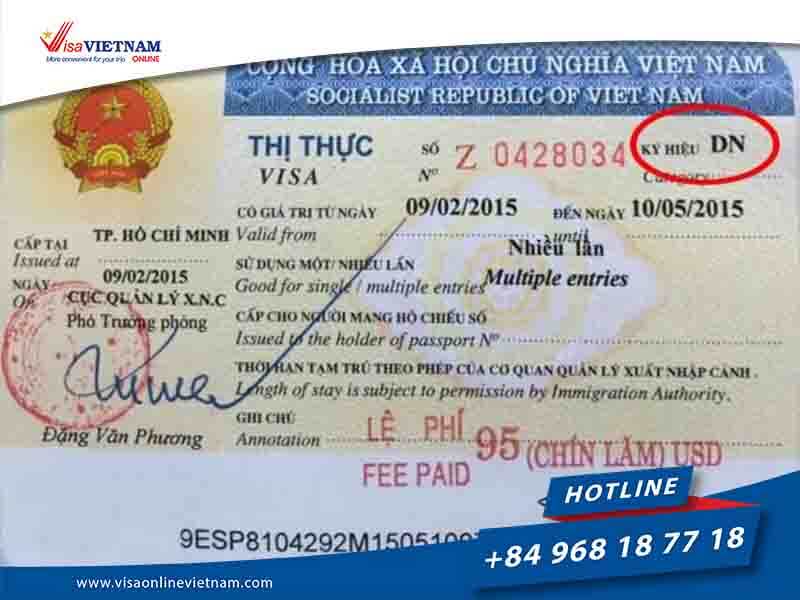
The Vietnamese government classifies business visas under the DN category — DN1 for those invited by Vietnamese enterprises, DN2 for those entering to work with foreign-invested companies operating in Vietnam. This distinction matters more for long-stay work situations than for short-term business trips, but it is worth knowing which category applies to your situation before you apply.
For most Thailand-based business travelers — attending meetings, signing contracts, conducting site visits, participating in trade shows, or exploring investment opportunities — the practical entry mechanism in 2026 is one of two routes:
Route 1: The 90-day E-visa with business purpose. Vietnam’s standard e-visa portal allows applicants to select “business” as the purpose of visit. For short-term activities (meetings, negotiations, conferences), this is the simplest option. Processing takes 3 business days standard; urgent processing available within 2–8 hours. No sponsorship letter required for this route.
Route 2: The DN visa via embassy application. For longer stays, more formal business engagements, or situations where your Vietnamese partner specifically requests the DN visa category on their invitation letter, applying through the Vietnamese Embassy in Bangkok is the correct route. This involves a sponsorship letter from a registered Vietnamese company and takes approximately 5 business days.
Which route you take depends on the nature and duration of your business activities. I’ll walk through both.
Business Vietnam E-Visa Requirements for Thailand-Based Travelers
The e-visa route for business travelers from Thailand requires the following:
- A valid passport with at least 6 months of validity beyond your planned departure date from Vietnam
- A recent passport-style photograph: plain white or light background, full face visible, no glasses
- Scanned copy of your passport bio-data page (the page with your photo and details)
- Your intended entry and exit dates
- Accommodation details or business address in Vietnam
- Purpose of visit: select “business” — not “tourism”
- Payment by credit or debit card
Standard processing is 3 business days from the date of submission. The approval arrives by email — save it to your phone, your email, and ideally print a copy. Vietnam accepts both digital and printed versions at immigration, but having a physical copy in your bag has saved more than a few people when airport Wi-Fi is unreliable.
For travelers departing from Suvarnabhumi (BKK) or Don Mueang (DMK) in Bangkok, or Chiang Mai International (CNX), the e-visa processing timeline is the same regardless of your departure point in Thailand. What matters is that you submit early enough. Business trips are often confirmed at short notice — if your meeting is booked less than 3 working days out, go directly to the urgent processing option.
The Crisis Scenario: Denied Boarding at Suvarnabhumi
Here is a scenario that plays out regularly at BKK. A businessperson — Thai national, or a foreign professional based in Bangkok — has a 7:45 AM flight to Tan Son Nhat (SGN). Meetings start at 2 PM in District 1. The visa was applied for a week ago, approval email received, everything looks fine. Then the check-in agent at the Thai Airways desk pulls up the booking, scans the passport, and flags the visa. The name on the e-visa reads “SOMCHAI WONGPRASIT” but the machine-readable zone of the Thai passport renders it as “WONGPRASIT SOMCHAI” — surname first, as Thai passports format it in the MRZ. Vietnam’s AI-driven border system does not forgive this mismatch. The airline cannot board a passenger with a flagged entry document.
It is 5:30 AM. The meeting is non-negotiable. There is no time to reapply through standard channels.
This is exactly the situation the urgent business Vietnam visa service exists for. A fresh application, correctly formatted, submitted through the priority processing channel, can deliver a verified approval within 2–4 hours. The passenger makes a later flight. The meeting happens.
💡 Expert Insight from Stanley Ho: “Over my 23+ years handling travel logistics and Vietnam visa services, the most frequent disruption occurs at the check-in desk due to simple application formatting errors. If you are stuck at the airport and denied boarding, don’t panic—our emergency team can secure a new E-visa clearance through priority channels within hours, saving your flight.”
The lesson: double-check your name against the machine-readable zone before submitting any business visa application. Not your name as you write it socially. The exact character sequence in those two lines of text at the bottom of your passport photo page. That is the ground truth the Vietnamese system checks against.
The Thai Passport Trap: Name Formatting and Transliteration Errors
Thai passports present specific formatting challenges for the Vietnam e-visa portal that catch Thailand-based applicants — both Thai nationals and expats — more often than you would expect.
Thai name length. Thai full names are frequently very long. The e-visa portal has field length limits. When a full name exceeds the character limit, the portal truncates it silently — and the truncated version no longer matches the MRZ. The fix: check that the name you enter matches the MRZ exactly, even if it feels truncated, because the MRZ is the reference point for border control, not your full ceremonial name.
Transliteration inconsistency. The same Thai name can be romanized in multiple ways — “Wanchai” vs “Wanchai”, “Pornpimol” vs “Pornpimol” — and Thai passport holders sometimes have passports issued at different times with slightly different transliterations. Always use the transliteration exactly as it appears on your current, valid passport.
Expats on non-Thai passports applying from Thailand. If you hold a New Zealand, Australian, British, or other Western passport and you are based in Bangkok — the same e-visa portal rules apply to you. Your application is processed identically regardless of where you are physically located. There is no need to visit the Vietnamese Embassy in Bangkok in person if you hold a nationality eligible for the e-visa; apply online from anywhere in Thailand and receive your approval digitally.
Middle names on non-Thai passports. New Zealand and Australian passports sometimes include middle names in the MRZ; sometimes they do not, depending on name length. Whatever appears in the MRZ is what goes on the visa application — do not add a middle name if the MRZ omits it, and do not omit it if the MRZ includes it.
Applying Through the Vietnamese Embassy in Bangkok (DN Visa Route)
For situations requiring the formal DN visa — longer stays, formal work engagements, or where your Vietnamese business partner specifically requests embassy-issued documentation — here is what the embassy application process involves in 2026.
You will need: a valid passport (minimum 6 months validity), completed visa application form, a sponsorship or invitation letter from your Vietnamese business partner (issued by a registered Vietnamese company), and payment of the applicable consular fee. Processing typically takes 5 business days from submission.
The Vietnamese Embassy in Bangkok is located at 83/1 Wireless Road, Lumpini, Pathumwan, Bangkok. Office hours for consular services are 8:30–11:30 AM and 13:30–16:30 PM, Monday to Friday, excluding Vietnamese and Thai public holidays.
One practical note: the embassy route requires physical presence for document submission and collection, which adds logistical overhead for busy schedules. For most short-term business trips, the e-visa route is faster, cheaper, and equally valid. Reserve the embassy DN visa application for situations where longer stays or formal employment relationships are involved.
Skip the Queue: VIP Fast-Track at Vietnam’s Business Hubs
You have made it through check-in at BKK, survived the flight, and landed at Tan Son Nhat (SGN) in Ho Chi Minh City. Now you are staring at the immigration queue, which at SGN during morning peak arrivals can run 45 minutes on a bad day. Your client meeting starts in 90 minutes and you still need to clear customs and get a taxi.
The VIP Airport Fast-Track service at SGN solves this entirely. A personal concierge meets you at the gate, walks you through a priority immigration lane, and has you through passport control before the main cabin queue has barely moved. Available at all major Vietnam international entry points: SGN (Ho Chi Minh City), HAN (Hanoi), DAD (Da Nang), and also CXR (Cam Ranh / Nha Trang) and PQC (Phu Quoc) for business travelers heading to coastal economic zones.
For the Bangkok–Hanoi route, the fast-track at Noi Bai (HAN) is equally worth the investment — HAN arrivals from Southeast Asia tend to land in batches, and the immigration hall queues accordingly.
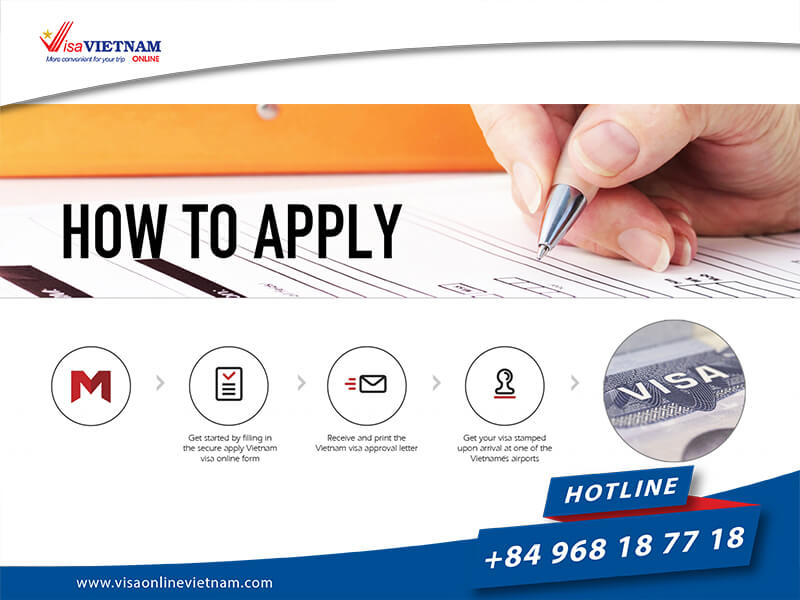
How to Apply for a Business Vietnam Visa from Thailand in 2026
The process is straightforward when you go through the right channel.
- Go to visaonlinevietnam.com/apply-vietnam-visa and select the business visa option. For most short-term business trips from Thailand, the e-visa with business purpose is the correct product.
- Choose your processing speed. Standard: 3 business days. Urgent: 2–8 hours. Rush/emergency: available for genuine airport crisis situations.
- Enter your full name exactly as it appears in your passport’s machine-readable zone — the two lines at the bottom of your photo page. This cannot be overstated.
- Upload your passport photo and a clear scan of your bio-data page. No glare, no cut-off corners, full page visible.
- Select “business” as your purpose of visit and enter your Vietnamese business contact’s address or your hotel address as accommodation.
- Pay and submit. Monitor your email and keep your phone on — the processing team may contact you to verify a data point before issuing approval.
- Receive your approval by email. Save copies in multiple places. Print one if departing within 24 hours.
- Present your approval at check-in in Bangkok and again at Vietnam immigration on arrival. You are done.
Frequently Asked Questions
Is the Visa on Arrival letter system still valid for business travelers from Thailand in 2026?
No. The VOA approval letter system has been discontinued. Any service offering to obtain a VOA letter for business or tourist travel to Vietnam in 2026 is selling you an obsolete product that will not be accepted at the airport. The e-visa — applied online and received digitally — is the standard entry mechanism.
Do I need a sponsorship letter to get a business Vietnam visa from Thailand?
For the standard 90-day e-visa with business purpose, no sponsorship letter is required. You select “business” as your visit purpose during the online application. A formal sponsorship letter is only required for the DN visa applied through the Vietnamese Embassy — which is relevant for longer stays or formal work engagements.
How long is the business Vietnam e-visa valid for travelers departing from Thailand?
The standard validity is 90 days from the entry date you specify, single or multiple entry. The processing speed (standard vs. urgent) does not affect validity — only how quickly you receive the approval.
Can I extend my business Vietnam visa once I’m already in the country?
Extensions are possible but are handled through the Vietnamese immigration authority (Cục Quản lý Xuất nhập cảnh) and typically require your Vietnamese business sponsor to file paperwork. It is considerably simpler to plan the correct duration upfront. If you expect your business activities to extend beyond 90 days, consider the DN visa route from the outset.
Can I apply for the business Vietnam e-visa from anywhere in Thailand — not just Bangkok?
Yes. The application is entirely online and location-independent. Whether you are in Bangkok, Chiang Mai, Phuket, or Koh Samui, you apply through the same portal and receive the same digital approval by email. There is no requirement to visit any embassy in person for the e-visa route.
About the Reviewer: Stanley Ho is the CEO of VisaOnlineVietnam and a recognized expert consultant in the international aviation and travel service industry. With 23+ years of experience in travel logistics and Vietnam visa services, Stanley and his team specialize in providing seamless visa solutions, fast-track airport services, and emergency travel assistance for global citizens visiting Vietnam.