Discover the Exciting Changes: Phu Quoc Visa Free 30 Days for Indian Citizens in 2026
Do Indian citizens need a visa to visit Phu Quoc in 2026? > No, Indian citizens do not need a visa to visit Phu Quoc Island for up to 30 days. Under the Special Economic Zone policy, Indian passport holders enjoy a 30-day visa exemption. However, strict conditions apply: you must fly directly to Phu Quoc International Airport (PQC) from an international destination (like New Delhi, Mumbai, or Kuala Lumpur) or transit through a Vietnamese international airport without clearing domestic immigration. If you plan to leave the island to visit mainland Vietnam, a standard 90-day Vietnam E-Visa is mandatory.
1. The Dream Destination: From the Subcontinent to the Pearl Island
Vietnam has rapidly become the top international holiday destination for the Indian diaspora. Whether you are flying out of the bustling tech hubs of Bengaluru and Mumbai, departing from the capital in New Delhi, or even traveling as an Indian expatriate living in Auckland (New Zealand) or Sydney (Australia), Vietnam offers an unbeatable mix of culture, affordability, and natural beauty.
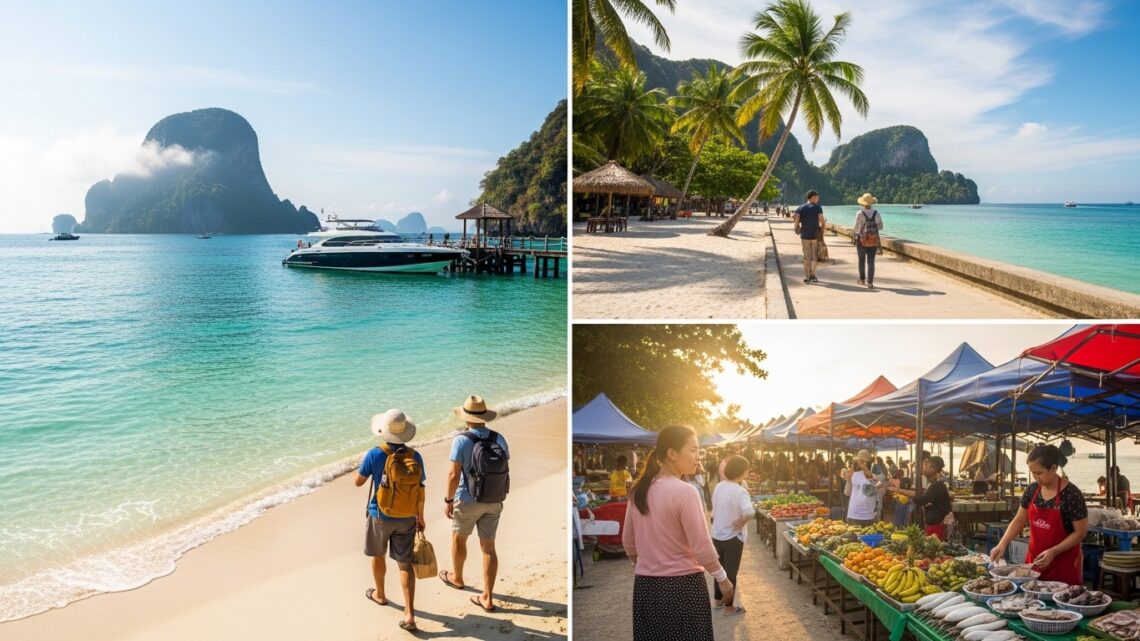
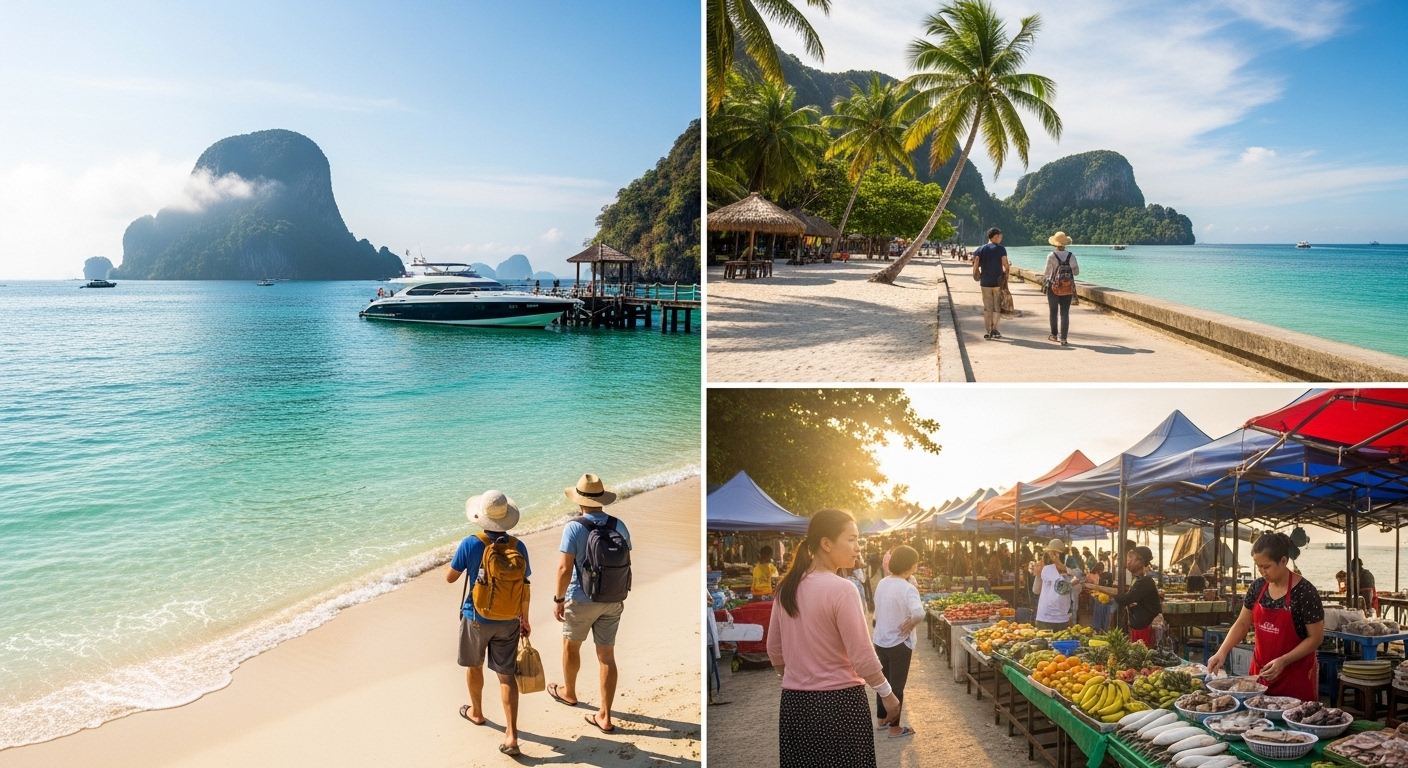
At the crown of this tourist boom is Phu Quoc Island (Đảo Ngọc). Located in the warm, turquoise waters of the Gulf of Thailand, Phu Quoc is famous for the pristine white sands of Sao Beach (Bãi Sao), the Venetian-inspired canals of Grand World, and the thrilling rides at VinWonders. It has also become Asia’s hottest destination for luxurious, multi-day Indian weddings.
The most exciting change for 2026? The Phu Quoc visa free 30 days for Indian citizens. This policy removes the bureaucratic hassle, making spontaneous island getaways easier than ever—provided you understand the strict immigration rules that govern it.
2. The 30-Day Exemption Rule: How It Works for Indians
The Vietnamese government has designated Phu Quoc as a Special Economic Zone. This grants all foreign passports, including Indian citizens, the right to stay on the island entirely visa-free for up to 30 days.
To qualify for this exemption, Indian travelers must meet all of the following criteria:
-
Passport Validity: Your Indian passport must be valid for at least 6 months beyond your arrival date in Phu Quoc.
-
Direct International Route: You must arrive at Phu Quoc International Airport (PQC) via an international flight. This means flying directly from India, or transiting through another country (like Singapore or Malaysia) straight into Phu Quoc.
-
Proof of Onward Travel: You must present a confirmed return flight ticket showing that you will leave Phu Quoc (and Vietnam) within 30 days.
-
No Mainland Travel: Your entire stay must be restricted to Phu Quoc Island.
3. The “Transit Trap” at Vietnam’s International Airports
This is the most critical section for Indian travelers and expats to read. Many travelers accidentally void their visa exemption because of how they book their connecting flights.
Vietnam has several major international entry points. Understanding how they connect to Phu Quoc is vital:
-
Tan Son Nhat International Airport (SGN) – Ho Chi Minh City: The primary hub for flights arriving from India and New Zealand.
-
Noi Bai International Airport (HAN) – Hanoi: The northern gateway.
-
Da Nang International Airport (DAD): The central hub.
-
Cam Ranh International Airport (CXR): Serving Nha Trang.
The Safe Route: VietJet Direct Flights
Airlines like VietJet Air frequently operate direct flights from New Delhi (DEL) and Mumbai (BOM) straight to Phu Quoc (PQC). If you take this direct flight, you walk straight through immigration in Phu Quoc and get the 30-day exemption stamp. No visa required!
The Transit Trap: Flying via Ho Chi Minh City (SGN)
Imagine you are an Indian expat flying from Auckland (AKL), or a traveler from Bengaluru (BLR). You book a flight to Ho Chi Minh City (SGN) on one airline, and a separate domestic flight from SGN to Phu Quoc on Vietnam Airlines. Because these are separate tickets, you must clear immigration at the international terminal in Ho Chi Minh City, collect your luggage, and walk outside to the domestic terminal. The moment you clear international immigration in HCMC, you have entered mainland Vietnam. The Phu Quoc exemption is instantly voided. The officer will ask for your visa, and you will be denied entry.
Rule of Thumb: If you transit in Vietnam, it must be on a single connected ticket where your bags are checked through to Phu Quoc, and you never leave the international transit lounge.
4. What If I Want to Visit Mainland Vietnam?
It is incredibly tempting to spend four days relaxing in the luxury resorts of Phu Quoc, and then fly north to experience the ancient streets of Hoi An, cruise the emerald waters of Ha Long Bay, or shop at the Ben Thanh Market in Ho Chi Minh City.
Can Indian citizens do this on the 30-day Phu Quoc exemption? No. The exemption strictly locks you to the island. If you want to travel to mainland Vietnam before, during, or after your stay in Phu Quoc, you must apply for a Vietnam E-Visa before you travel.
The 2026 Vietnam E-Visa is a powerful tool for Indian passport holders:
-
It allows stays of up to 90 days.
-
It offers Multiple Entries, meaning you can fly from India to HCMC, fly to Phu Quoc, fly to Cambodia for a few days, and fly back to Hanoi all on the same visa.
-
It is processed 100% online.
5. Stranded at the Airport? The Emergency Visa Rescue
Every week, our consular team receives panicked phone calls from Indian nationals stranded at Changi Airport in Singapore, Kuala Lumpur (KUL), or even at check-in counters in New Zealand and India. They booked the “Transit Trap” route through Ho Chi Minh City, assuming the Phu Quoc exemption would cover them, and the airline staff has just denied them boarding.
If you find yourself in this nightmare scenario, the standard government E-Visa portal cannot save you, as it takes 3 to 5 working days and shuts down completely over the weekend.
The TRANSOCEAN Fast-Track Solution: Led by immigration expert Stanley Ho, our 24/7 global crisis team specializes in airport rescues. We coordinate directly with the Vietnam Immigration Department to process a Super Rush Emergency E-Visa in just 2 to 4 hours. Whether it is a Sunday morning or an Indian public holiday like Diwali, our team ensures you receive your legal entry clearance so you do not miss your flight and your dream vacation.

6. Comprehensive Q&A:
To ensure Indian citizens and expats have every detail covered, we have answered the most highly-searched, specific questions regarding the Phu Quoc visa rules.
Q1: Do Indian citizens need a visa for Phu Quoc if arriving by cruise ship?
Answer: No. If your international cruise ship docks directly at the Phu Quoc seaport, you are eligible for the 30-day visa exemption. However, you must depart with the ship or fly directly out of Phu Quoc internationally without visiting mainland Vietnam.
Q2: Can I apply for a Vietnam E-Visa while I am already on Phu Quoc island?
Answer: Yes, but it is highly inefficient. If you arrived visa-free and suddenly decide you want to visit Hanoi, you must apply for an E-Visa online, wait 3-5 days for approval, and then do a “border run” (e.g., fly from Phu Quoc to Thailand, then fly into Hanoi using the new E-Visa). It is much smarter to apply for the 90-day E-Visa before leaving India or New Zealand if you plan to explore the mainland.
Q3: I am an Indian citizen holding a New Zealand Permanent Resident (PR) visa. Do I get visa-free entry to mainland Vietnam?
Answer: No. Vietnamese immigration rules are based strictly on your passport nationality, not your country of residence. An Indian passport holder living in Auckland on a PR visa still needs a Vietnam E-Visa to enter mainland Vietnam, though the Phu Quoc exemption still applies for direct island flights.
Q4: What happens if I overstay the 30-day Phu Quoc exemption?
Answer: Overstaying your visa exemption is a serious violation. You will be subject to heavy daily fines at Phu Quoc International Airport upon departure, face potential detention, and risk a long-term ban from re-entering Vietnam.
Q5: How much does the Vietnam E-Visa cost for Indian passport holders?
Answer: If you decide to visit mainland Vietnam, the official government fee for an E-Visa is $25 USD for a single entry and $50 USD for multiple entries (valid for up to 90 days).
Author:
-
Stanley Ho – Founder, CEO & Lead Consular Consultant
-
With 23 years of specialized experience in Vietnamese immigration law, Stanley Ho bridges the gap for global travelers. From clarifying the Phu Quoc exemption for Indian nationals to executing zero-hour airport visa rescues across Oceania and Asia, his dedicated team at TRANSOCEAN ensures that every traveler achieves a seamless, 100% legally compliant entry into Vietnam.