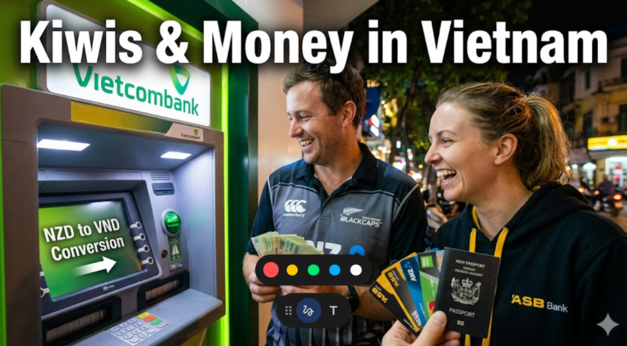
Money & Banking in Vietnam: NZD to VND Tips for Kiwis 2026
What is the best way to manage money in Vietnam for New Zealanders? > The official currency of Vietnam is the Vietnamese Dong (VND). You cannot use New Zealand Dollars (NZD) for daily transactions in Vietnam. The best way to take money to Vietnam from NZ is a mix of methods: carry a physical travel card (like Wise or Revolut) to withdraw VND at local ATMs with low fees, and bring some crisp, undamaged NZD or USD cash to exchange at gold shops or international airports. Be aware that standard NZ EFTPOS cards do not work in Vietnam; you must use a Visa or Mastercard.
From the New Zealand Dollar to the Vietnamese Dong (VND)
Swapping the quiet landscapes of Waikato or Queenstown for the energetic, neon-lit streets of Ho Chi Minh City or the ancient alleyways of Hanoi is a thrilling experience. However, the financial transition from New Zealand Dollars (NZD) to Vietnamese Dong (VND) can be a major culture shock for Kiwis.
In New Zealand, you might go weeks without touching physical cash, tapping your EFTPOS card for everything from a flat white to a tank of gas. Vietnam in 2026 is rapidly digitizing, but it is still fundamentally a country where Cash is King, especially for tourists.
The Vietnamese Dong operates in the “millions.” A simple bowl of Pho in the Hanoi Old Quarter might cost 50,000 VND (roughly $3.20 NZD), while a nice dinner in Da Nang could set you back 1,500,000 VND. Vietnam uses polymer notes, which are waterproof and durable.
⚠️ Important Kiwi Warning: The 20,000 VND note and the 500,000 VND note look strikingly similar (both are a bluish color). Always double-check the zeros before handing over your cash in a dimly lit night market!
Can You Use NZD Cash in Vietnam?
No. Unlike some Pacific island nations where NZD is readily accepted, you cannot walk into a café in Hoi An or a tailor shop in District 1, Ho Chi Minh City and pay with New Zealand paper money. You must convert your NZD to VND.
While some high-end tourist establishments might accept US Dollars (USD), relying on foreign currency means you will be subjected to terrible “tourist exchange rates” calculated on the spot by the vendor. Always pay in VND.
Best Places to Exchange NZD to VND
If you are bringing physical New Zealand cash to exchange, the condition of your bills matters. Vietnamese money changers will reject ripped, heavily folded, or marked NZD notes. Ensure you bring crisp, new bills from your bank in Auckland, Wellington, or Christchurch.
Here are the best places to convert your money:
1. Vietnam’s International Airports (For Immediate Cash)
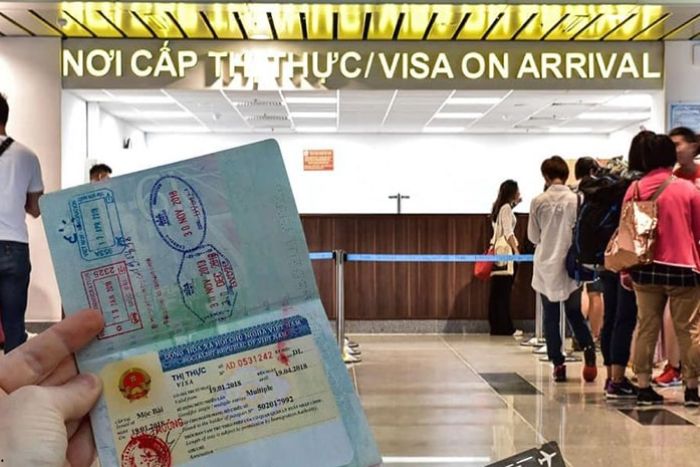
When you land, you will need immediate cash to pay for a taxi or a SIM card. All of Vietnam’s designated international airports have multiple currency exchange booths right after you clear customs:
-
Tan Son Nhat International Airport (SGN): Booths are open 24/7.
-
Noi Bai International Airport (HAN): Excellent rates at the arrival terminal.
-
Da Nang International Airport (DAD): Convenient for those heading straight to Central Vietnam resorts.
-
Cam Ranh International Airport (CXR): Serving the Nha Trang coastal area.
-
Phu Quoc International Airport (PQC): Essential if you are arriving directly to the island under the 30-day visa exemption.
Tip: Only exchange about $100 – $200 NZD at the airport. You will find better rates in the city.
2. Gold and Jewelry Shops (The Local Secret)
The best NZD to VND exchange rates in Vietnam are not found at banks, but at licensed gold and jewelry shops.
-
In Hanoi, head to Ha Trung Street in the Old Quarter.
-
In Ho Chi Minh City, walk around the perimeter of Ben Thanh Market in District 1. These shops offer rates extremely close to the Google mid-market rate with zero commission fees.
3. Exchanging Before Leaving New Zealand
Do not exchange your NZD to VND at Travelex booths in Auckland Airport before departure. The spread (the difference between the buy and sell price) is notoriously high, and you will lose a significant amount of money.
Using NZ Bank Cards and ATMs in Vietnam
If you prefer not to carry stacks of cash, using ATMs in Vietnam is easy, but it requires preparation.
-
EFTPOS Does Not Work: Your standard New Zealand EFTPOS card will not work at Vietnamese ATMs or point-of-sale terminals. You must have a card with a Visa or Mastercard logo.
-
Bank Fees: If you use a standard ANZ, BNZ, ASB, or Westpac debit/credit card, you will be hit with a foreign transaction fee (usually around 2-3%), plus a flat international withdrawal fee from your NZ bank, plus a local ATM fee in Vietnam (typically 30,000 to 50,000 VND per transaction).
-
The Best Solution for 2026 (Travel Cards): Savvy Kiwis use cards like Wise (formerly TransferWise) or Revolut. You can load NZD onto your Wise app, convert it to VND at the mid-market rate, and withdraw from local ATMs. Look for ATMs from TPBank, VPBank, or Agribank, which often have higher withdrawal limits and lower local fees.
Tipping Culture and Bargaining
Understanding money goes beyond exchange rates; it’s about knowing how to spend it.
-
Tipping: Vietnam does not have a mandatory tipping culture like the USA. However, leaving a small tip (20,000 – 50,000 VND) for a helpful tour guide, a friendly Grab driver, or at a nice restaurant is highly appreciated, as local wages are modest.
-
Bargaining: If you are shopping for souvenirs at the Dong Xuan Market in Hanoi or the Hoi An Night Market, bargaining is expected. A good rule of thumb is to start at 50% of the initially quoted price and meet somewhere in the middle with a smile. However, you do not bargain for food, at convenience stores, or anywhere with a printed price tag.
The Ultimate Prep: Don’t Let Visa Issues Drain Your Wallet!
Managing your money perfectly means nothing if you can’t even get into the country. Every year, we see Kiwis lose thousands of dollars in non-refundable flights and hotel bookings because they assumed they didn’t need a visa, or their E-Visa had a typo.
New Zealand citizens MUST have a valid Vietnam E-Visa before checking in for their flight.
If you are stuck at an airport in New Zealand or Australia because of a visa issue, the TRANSOCEAN global crisis team is your financial lifesaver. Instead of buying a new $1,500 flight, our team—led by Stanley Ho—can process a Super Rush Emergency E-Visa in just 2 to 4 hours. We operate 24/7, bypassing the slow government system to ensure you make your flight and protect your travel investment.
Extensive Q&A
To ensure New Zealanders have every financial detail covered, we have answered the most specific and highly-searched questions about banking in Vietnam.
Q1: Can I use my Wise card in Vietnam?
Answer: Yes, absolutely. The Wise card (Visa/Mastercard) is arguably the best travel card for Kiwis in Vietnam. You can use it to withdraw VND from local ATMs or tap to pay at large supermarkets, hotels, and modern restaurants in major cities.
Q2: How much cash should I bring to Vietnam for 2 weeks?
Answer: It depends on your travel style. As a baseline, budget around $60 – $100 NZD per day for mid-range travel (local food, reasonable hotels, daily tours). For a 2-week trip, carrying $300-$500 NZD in crisp cash to exchange upon arrival, and relying on a Wise card for ATM withdrawals for the rest, is a highly secure strategy.
Q3: Are credit cards widely accepted in Vietnam?
Answer: In major cities (Ho Chi Minh City, Hanoi, Da Nang), Visa and Mastercard are widely accepted at hotels, upscale restaurants, and shopping malls. However, street food vendors, local taxis, and small town shops in places like Ninh Binh or Sapa operate strictly on cash. A 3% surcharge is sometimes added to credit card transactions by the merchant.
Q4: Is it better to exchange NZD to USD before going to Vietnam?
Answer: In 2026, this is generally unnecessary and costs you double conversion fees (NZD to USD, then USD to VND). Simply bring crisp NZD notes to exchange directly in Vietnam, or withdraw VND straight from an ATM using a travel card.
Q5: What should I do if my NZ bank blocks my card in Vietnam?
Answer: Before leaving New Zealand, you must notify your bank (via their banking app or a phone call) of your travel dates to Vietnam. If you forget, their fraud detection systems will likely block your card the moment you use an ATM in Ho Chi Minh City. If blocked, you will need to call their international support line via Wi-Fi calling.
 Author: Stanley Ho
Stanley Ho is the Founder and CEO of TRANSOCEAN, serving as the Lead Consular Consultant. With over 23 years of expertise in Vietnamese immigration law, travel services, and global mobility, he specializes in Vietnam Visas, Work Permits, and Consular Legalization. His primary mission is ensuring 100% legal compliance and seamless transitions for Kiwi expats and Oceania professionals relocating to Vietnam. Stanley Ho has spent years advising New Zealand expats on financial transitions to Vietnam. He specializes in helping Kiwis optimize their travel spending and navigate local banking regulations.